Too strange for misunderstanding
The L.A. fires prompt a strange reunion between a coyote and a river.
By 3am the freeway would open wide, empty of traffic, a high meadow riven with tire indentations and residues of tar. Warm on her paws. She would find trash bins with chicken bones and rotten fruit.
Her mother had once taught her how to swim the city. In denning season, they retreated to the mountains. There were four of them. In June they came down from the hills to hunt at night. Following the paths made by thousands of deer to sources of rest, to where the water didn’t burn their paws, where the old rocks remembered them.
After two winters without her mother – she gave birth to a pup. It grew large enough to wean. She brought it every little thing she caught. It died during a heat wave – even the lizards stayed in their hiding places. In the middle of a dream, eyes closed, ears twitching.
She could hear it before she could smell it; a brittle whine, juniper and oak snapping. The air pressure dropped suddenly, and she had the instinct to run. She was in an underpass where three freeways met to form a roaring roof. Decades of trash laced into thick mats. The squirrels were languid and unsuspecting here, but she’d caught none yet.
This smell of ash, the bristling wind. A monstrous force sucking the oxygen out of the air. Go to the river. She had never known a fire herself. For so long, the mountains had been choked with dry brush. When fire tried to flush the forest, humans dampened it out. This fire was hungry beyond reason, the mountains exhaling violently.
Go to the river. She knew other rivers, but not the one she was impelled to. She often went to the stream that winnowed between two hill faces. It only appeared after rains, and disappeared quickly. This river, the one that called her, was not one of these fleeting waters. The memory of it preceded her own life. Memory of mud and water birds, a memory belonging to her great grandmothers.
--
She sensed through her paws the human fear. In the concrete that stretched like a scab: the fear of the land’s fluctuating breath. In the electric wires: fear of silence and darkness. In the barbed fences, fear of one another.
The people who were dangerous to each other were also most dangerous to her. There was a warning in the sirens. The large humming facilities that consumed living water and spit it back out, acrid. There were large cement compounds where people were kept in cages. The crows spoke of what they’d seen.
--
There was a panic. A fawn loping down the middle of a street, hooves skidding on the asphalt. Three people carrying their elder in their arms. The squirrels chattering wildly, unwilling to flee their trees. Many people had already fled. Those who remained were collecting water in buckets, spraying water on their roofs. They didn’t even see her.
While she ran, she was reminded of the intimate smells she knew of people. She was rarely this proximate. But the only way through was on their roads, through their alleys. She tried not to smell them for long. The mucky salty smell of children’s diapers in the trash. The residue of a woman’s jasmine cologne on a plastic lawn chair. Old clothes in a dumpster suffused with sweat.
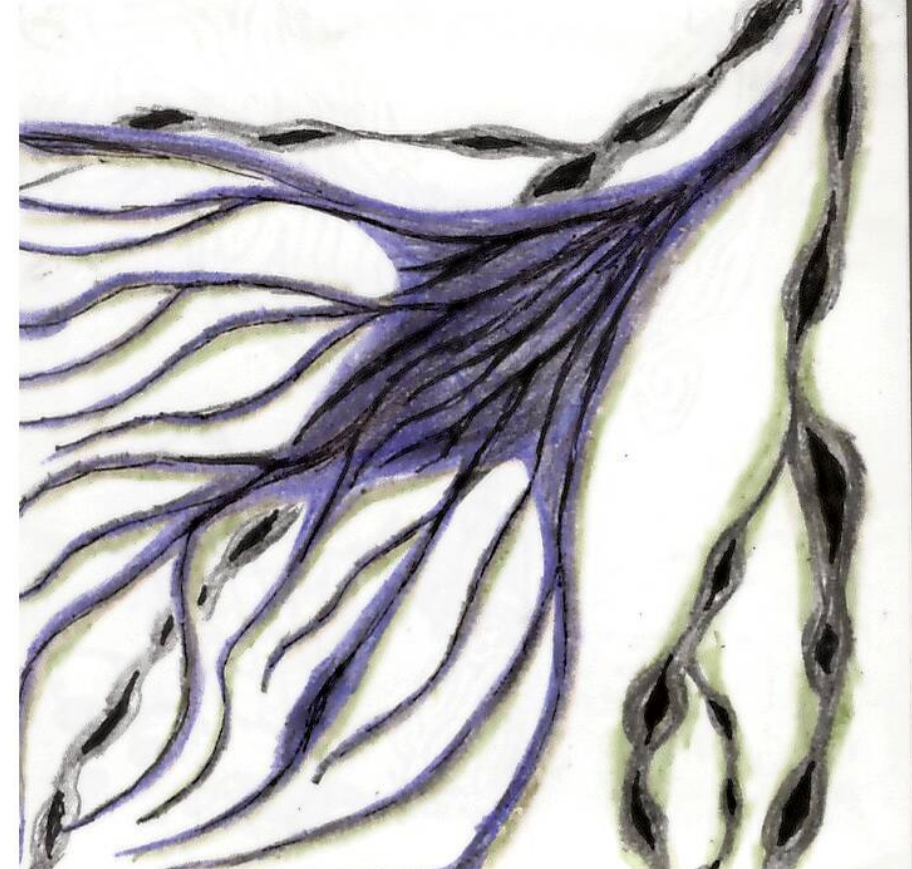
As she approached the river, she could feel its ghost. The sense of the old river’s changing shape as it flooded and dried in different places each year. The rich alluvial planes. There was wide water here. She could sense the old cranes, osprey, nuthatches, humming birds that had once descended over the reeds. The reflection of the sky in the undulating surface. The frogs chirping in spring. She could, even now, almost smell the old thick funk of algae and moss on the rocky edges, hear the chatter of waves.
It had been decades since fire had called any of her family down here. Not her mother, not her grandmother. The river had been a concrete channel for so long, no place to find refuge in. There were older ones who had once come here for the water and the shadows.
Now there was no river to speak of. But she could still remember it, could feel its old reality. The river of her ancestors, the refuge in the perennial blooms of fire that refreshed the forest, was gone.
Her body hurt.
She crept down to the tiny trickle of water that, barely moving, ran through the center of the cement channel. It was mostly a thin layer of dry, gritty mud. She treaded through broken glass. On the chainlink fence surrounding the river, mountain songbirds sat in a row, hunched. At the bottom, she sniffed the water. There was motor oil and a sulfury smell. It was not even enough to drink. She touched a paw.
At first, the water startled at her touch. It had been so long since this part of the L.A. River had known coyote feet. There was a hesitancy, a strangeness. Too much loss, the river had carried on its own, for too long. It remembered the mud, the birds, the reflection of the sun. All gone. Was it even a river anymore? But here were paws that knew the memories.
She touched her nose to the cement, sensing the water that once rushed here, unimpeded; that would one day again. The ash cleared briefly from her lungs as she inhaled.